China ID Card Photo
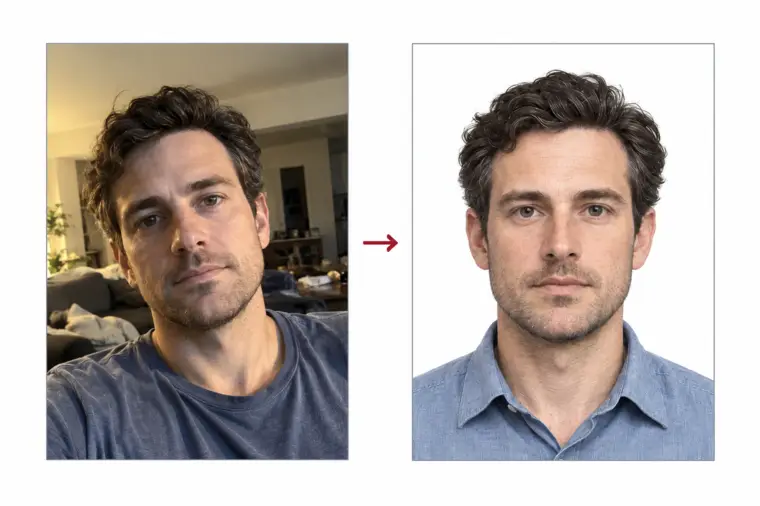
The Resident Identity Card (居民身份证) is the identity document every Chinese citizen carries from the age of 16. Its portrait follows a national standard that is stricter than most people expect. Upload a photo from your phone and we turn it into a China ID card photo: cropped to 26 × 32 mm, set on a plain white background and measured before you download it.
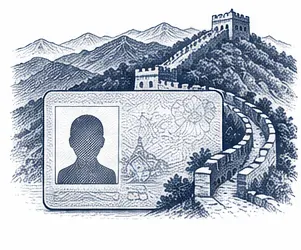
| Size | 26 × 32 mm |
|---|---|
| Head height | 20 mm |
| Background | white |
| Resolution | 350 dpi |
| File size | up to 40 KB |
| Use | digital upload and print |
China ID card photo size and rules
A printed ID card photo measures 26 mm across by 32 mm in height, a narrow portrait shape that suits the space on the card. The digital version is defined by the Chinese public security standard GA461-2004: a colour JPEG of 358 × 441 pixels, which equals the print size at a resolution of 350 DPI. Both describe the same picture, so your file and a print match exactly.
- Print size: 26 × 32 mm
- File size in pixels: 358 × 441 at 350 DPI
- Face width: 207 ± 14 pixels, about 15 mm on paper
- Hairline: 7 to 21 pixels below the top edge
- Eye line: 207 pixels or more from the lower edge
- Background: pure white, no border
Our tool saves the file under 40 KB, small enough for online systems that accept a digital ID card photo.

Framing the face
The head is large in this format: it takes up about two thirds of the photo height. Look straight into the camera with your chin level and both shoulders square. The whole head must be visible, from the chin to the top of the hair, with no part cut off by the edge. Hair should not cover the eyes or eyebrows.
The rules ask for a natural expression and no visible distortion. Keep your mouth closed and your eyes open. A broad smile, raised eyebrows or a tilted head move the face outside the tolerances of the Chinese standard, even when the photo looks fine to you.
Background, light and clothing
The background of a Chinese ID card photo is white. Some guides mention light blue for Chinese documents, but for the Resident Identity Card the Chinese guidance says white, with no border and no shadow. You can stand in front of any plain wall; we replace it with clean white during processing.
Do not wear white, light grey or a uniform. White clothes disappear into the background, and uniforms are not accepted on a civil identity card. A dark or coloured top is the safe choice. The portrait must be bareheaded, so take off hats and caps.
Glasses work the other way round from a visa photo. If you wear glasses every day, keep them on, so the card shows your usual face. Tinted lenses are not suitable, and the lenses should not reflect light.
-
 Accepted
-
 Accepted
-
 Smiling
-
 Mouth open
-
 Head tilted
-
 Fashion hat
-
 Shadow behind
-
 Glare on glasses
-
 Too far away
-
 Head cut off
-
 Busy background
-
 Hair over eyes
The people in these examples are AI-generated.
How to make a China ID card photo with our tool
- Take a photo. Stand facing a window in daylight while a friend holds the phone level with your eyes, about a metre and a half away.
- Upload it. Choose China Resident ID card and send the JPG, PNG, HEIC, PDF or other image file from your phone.
- Check the result. We crop the photo to the ID card size, set the white background and run a compliance check on head position, focus and light.
- Download. The digital ID card photo is free. You can also order a print sheet and cut the 26 × 32 mm photos from it.
Where to submit the photo
Resident Identity Cards are issued by the Public Security Bureau of China. You apply at a household registration office or police station, and since 2023 a first card or a renewal can also be handled away from your registered home. Many offices take the photo on site. Where an office, a certified studio or an online service accepts your own digital ID card photo, our 358 × 441 pixel JPEG is the file it expects. Ask the office before you go, as local practice in China varies.
-
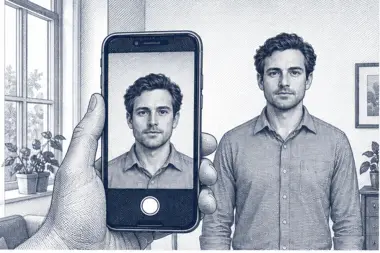 1. Take the picture
At home, against a plain wall, in daylight.
-
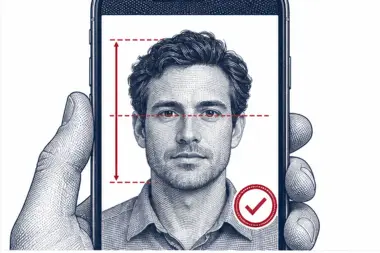 2. We check and crop
Head height, eye line and background are measured.
-
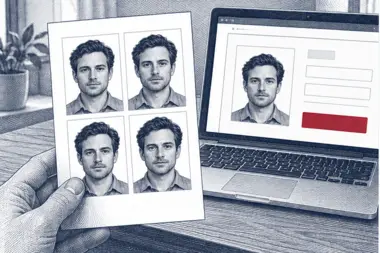 3. Download or print
A file for the upload form or a print sheet.
Who needs a Chinese Resident Identity Card
Every Chinese citizen living in mainland China must apply for the card at 16, and younger children may get one if their parents ask for it. In daily life in China the card is needed to open a bank account, buy a train ticket, check into a hotel, see a doctor or deal with almost any government office. The validity depends on age: a card issued between 16 and 25 lasts 10 years, between 26 and 45 it lasts 20 years, and from 46 it does not expire. Children under 16 get a card valid for 5 years. Each new card, whether after expiry, loss or a change of details, needs a new ID card photo.
Digital ID card photo for online applications
More and more Chinese cities let residents start an application online or send a digital photo through an approved studio, so the file matters as much as the print. The Chinese standard fixes the pixel size of the file, so a photo that is a little too wide or too narrow is not simply resized by the system; it is sent back. Our file is 358 × 441 pixels and keeps the face position inside the limits. Keep the file exactly as you download it. Cropping it again in a phone gallery or saving it from a screenshot changes the size and the quality of the photo.
Common reasons an ID card photo is refused
- The photo is not the 26 × 32 mm size, or the file is not 358 × 441 pixels.
- The background is blue, grey or shows a shadow.
- White clothing or a uniform, both refused by Chinese offices.
- A hat, cap or head covering hides the head.
- Glare on glasses or bright spots from a flash.
- A blurred, grainy or filtered photo. Chinese card production relies on a clear face for later checks.
Examples
- Accepted: centred face, everyday glasses without glare, dark shirt, even white background.
- Refused, white shirt: the shoulders fade into the background.
- Refused, small head: the face fills less than half of the photo.
- Refused, beauty filter: the skin is smoothed and the face shape has changed.
- Refused, blue background: a photo made for another Chinese document was reused.
- Refused, cap: the photo shows a baseball cap; the card needs a bareheaded photo in China.
- Refused, tinted glasses: sunglasses or photochromic lenses darken the eyes in the photo.
Tips for a good source photo
- Leave space around your head and shoulders; we crop the photo, but we cannot add what is missing.
- Turn off the flash and avoid lamps behind you.
- Upload the original photo, not a copy compressed by a messenger app.
- Take a few shots and pick the sharpest photo; the Chinese standard asks for a clear, detailed portrait.
Checklist
- 26 × 32 mm on paper or 358 × 441 pixels as a file
- Plain white background with no border
- Bareheaded, facing the camera, natural expression
- Everyday glasses on, no tint, no glare
- No white clothing and no uniform
- Sharp colour photo with no filter
Free photo or premium processing
The free ID card photo already has the right size, the white background and the head position the Chinese standard asks for. Premium processing is optional and paid: we correct light and colour, and a member of our team reviews the photo by hand. If the reviewer finds a problem, you can upload a new photo at no extra cost.
Most people in China only need the free photo. Premium makes sense when your source photo was taken in poor light, or when you want a person to look at the photo before your appointment at a Chinese office. Either way, the photo keeps your real face: we never reshape it or add beauty effects.
Related Chinese documents
Each Chinese document has its own photo rules, and a single print seldom fits them all. A China visa photo is made for foreign travellers, and a Chinese passport photo is larger and has its own head size. The Foreign Permanent Resident ID Card, the card for foreigners who live in China long term, uses yet another format. None of them replaces the Resident Identity Card photo, and glasses rules differ too: a pair you keep on for the ID card may have to come off for a passport. If you renew several Chinese documents in one year, upload your photo once for each of them and download the version that fits.
Chinese citizens abroad who renew a passport at a consulate also need a separate photo. The ID card itself is only issued in China, so its photo is not part of a consulate application.
Frequently asked questions
How big is a Chinese ID card photo?
26 mm wide and 32 mm high on paper, or 358 × 441 pixels at 350 DPI as a digital file.
Which background colour is required?
Plain white with no border. A blue background is not correct for the Resident Identity Card.
Should I wear glasses?
Yes, if you wear them every day. Avoid tinted lenses and glare.
Is the ID card photo free?
Yes. The digital photo and the check are free. Premium processing with a manual review is optional.
Can I take the photo at home?
Yes, a phone photo against a plain wall in daylight works. We crop it and make the background white. Some offices in China still prefer to take their own photo, so ask first.
Can I use my Chinese passport photo?
No. The Chinese passport photo has a different size and head position, so make a separate photo for the Chinese ID card.
Can I apply online?
It depends on the city. Some Chinese cities accept an online start of the application or a digital photo from an approved studio. Our file is ready for online use.
At what age do Chinese citizens need the card?
From 16. Children under 16 may apply voluntarily. A card issued between 16 and 25 is valid for 10 years.